
Go Ahead, Have Another Piece. Science Says It's Fine.

The health benefits of chocolate are real - and more interesting than you might think.
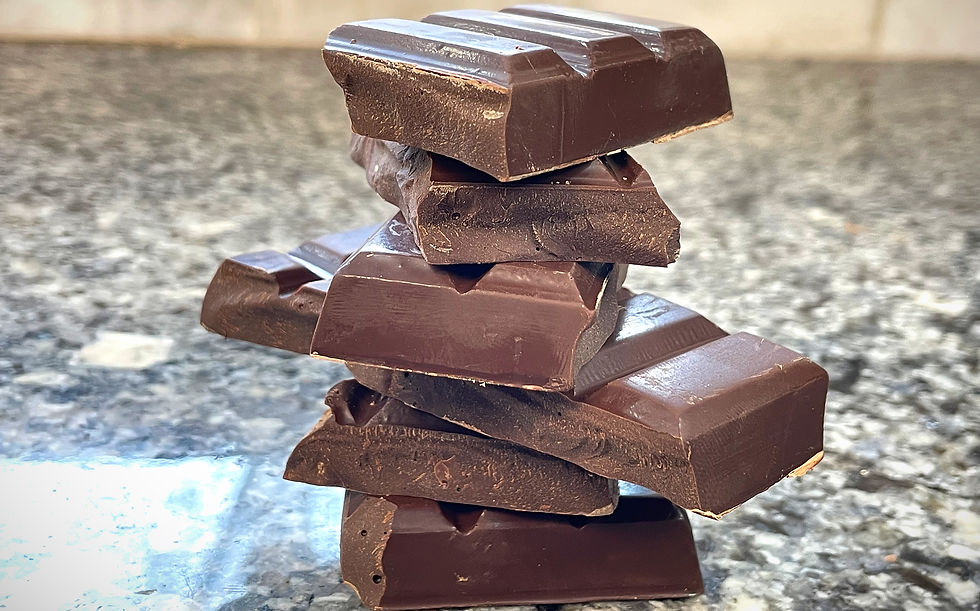
Most of us don't reach for chocolate because we read a health study. We reach for it because it's one of life's great simple pleasures - rich, indulgent, and satisfying in a way that a rice cake will never be. But here's the thing: science has been quietly (and at times not-so-quietly) building a case for chocolate that goes well beyond tasting delicious. The research is backed by science and constantly expanding, and it turns out the instincts of we chocolate lovers may have been right all along.
Not All Chocolate Is Created Equal
Before we get into the good stuff, it's important to note that the health benefits researchers keep finding are tied primarily to cacao, the essential plant-derived ingredient at chocolate's core. The more cacao in your chocolate, the more of those beneficial compounds make it to your mouth. That's why dark chocolate, with its higher cacao content, tends to dominate the health headlines, while the candy bar you bought at a gas station checkout is doing less of the heavy lifting.
Quality matters too. Heavily processed chocolate often loses many of these compounds during manufacturing. Starting with a high-quality couverture chocolate - the kind we use at Christo's Confections - preserves much more of what makes cacao nutritionally interesting and, let's face it, just plain tastier.
Flavanols: What They Are and Why You Should Care
Cacao is one of the most concentrated natural sources of flavanols - plant compounds with a winning track record in cardiovascular research.
What the Research Shows
• Flavanols support nitric oxide production, which helps relax and widen blood vessels, potentially lowering blood pressure over time.
• Multiple meta-analyses link regular dark chocolate consumption with modest improvements in both LDL ("bad") and HDL ("good") cholesterol levels.
• The COSMOS-Mind trial (2022) found cocoa flavanol supplementation was associated with improved cognitive function in older adults.
• Cacao is a legitimate source of magnesium, iron, zinc, copper, and manganese - minerals that matter for energy, immunity, and bone health.
To be clear: chocolate isn't a supplement or a prescription (though if it were, we would never miss a dose). Researchers are appropriately cautious, and overall diet matters far more than any single food. But the researched benefits are sufficiently consistent across enough independent studies that we've moved well past wishful thinking.
Your Brain on Chocolate
Cacao has a surprisingly interesting effect on the brain, and not just the obvious "this is delicious" response, though that one is real and valid. Cacao contains theobromine (a gentle, longer-lasting cousin of caffeine), phenylethylamine (which your brain naturally produces when you're excited or in love), and a compound called anandamide (literally named from the Sanskrit word for "bliss").
None of these will dramatically alter your mental state. We're not suggesting that eating a truffle before a test is going to boost your grade (but it still can't hurt, right?). But together, they likely contribute to chocolate's well-documented mood-lifting effect - something studies on depression and anxiety have found real associations with, even if the cause-and-effect is still being untangled.
Theobroma cacao: the scientific name literally means “food of the gods.” Ancient Mesoamericans were working with solid data.
Dark Chocolate and Gut Health: A Surprisingly Good Match
Emerging research suggests that dark chocolate flavanols may act as prebiotics, feeding the beneficial bacteria in your gut microbiome. Studies have found that consuming dark chocolate is associated with increases in Lactobacillus and Bifidobacterium, two of the bacteria that keep your tummy happy.
Gut microbiome research is a surprisingly active area in medicine right now, with connections being drawn to immune function, mood, and metabolic health. The chocolate-gut story is still developing, but the direction is consistent and encouraging. Which is a sentence we never expected to write, but here we are.
What About the Sugar and Fat in Chocolate?
It wouldn't be honest to skip this. Chocolate contains sugar and saturated fat, both of which, in excess, are worth paying attention to. But there's more nuance here than the nutrition label suggests.
The dominant fat in cocoa butter is stearic acid, which research shows is unusual among saturated fats in being essentially neutral on cholesterol; it doesn't raise it the way many others do. Cocoa butter also contains oleic acid, the same heart-friendly fat found in olive oil. As for sugar: higher-cacao dark chocolate has significantly less of it, and good chocolate tends to be rich enough that you don't need much to feel satisfied. A single well-made truffle, eaten slowly, goes a lot further than you might expect.
How Much Chocolate Per Day Is Actually Good for You?
Most studies showing benefit used roughly 20-40 grams of dark chocolate per day, about one to two good squares. We're not doctors, but we're not not recommending it. A daily, intentional bit of quality chocolate fits comfortably into a healthy lifestyle, and you don't need to feel guilty about it.
The word "quality" keeps coming up, and it's not snobbery. It's just that the processing matters for the compounds that matter. A small amount of something made thoughtfully, whether that's a beautifully tempered bar or a hand-dipped truffle, delivers more of what the research points to than a larger amount of something heavily processed. Think of it as quality over quantity.
The Health Benefit Nobody Thinks About: Enjoyment
This point gets undervalued in nutrition conversations: pleasure is itself a hea
lth factor. Chronic stress and perpetual dietary guilt have real physiological costs. Good chocolate, eaten with actual attention - noticing the snap, the melt, the way the flavor opens up - is a small act of mindfulness that most people could use more of.
Chocolate, in some form, has been associated with ritual, celebration, and comfort across virtually every culture that has encountered it. There's a reason it shows up at birthdays, breakups, holidays, and Tuesday afternoons with equal appropriateness. Some things earn their place, and chocolate has been earning it for a very long time.
So go ahead; have another piece. You have science on your side now. And if anyone gives you a look, you can tell them you're supporting your cardiovascular health and gut microbiome.
Or just offer them one and let the chocolate do the talking.
Christo's Confections - Artisan chocolates handcrafted to spread happiness, one bite at a time.
This post is for general wellness interest only and is not medical advice. Please consult a qualified healthcare provider for health-specific questions.
Sources
1. Corti R, et al. (2009). Cocoa and cardiovascular health. Circulation, 119(10), 1433-1441.
2. Hooper L, et al. (2012). Effects of chocolate, cocoa, and flavan-3-ols on cardiovascular health. American Journal of Clinical Nutrition, 95(3), 740-751.
3. Brickman AM, et al. (2014). Enhancing dentate gyrus function with dietary flavanols improves cognition in older adults. Nature Neuroscience, 17(12), 1798-1803.
4. COSMOS-Mind Trial (2022). Cocoa Supplement and Multivitamin Outcomes Study for the Mind. American Journal of Clinical Nutrition.
5. Tzounis X, et al. (2011). Prebiotic evaluation of cocoa-derived flavanols in healthy humans by using a randomized, controlled, double-blind, crossover intervention study. American Journal of Clinical Nutrition, 93(1), 62-72.
6. Scholey A, Owen L. (2013). Effects of chocolate on cognitive function and mood: a systematic review. Nutrition Reviews, 71(10), 665-681.
7. Katz DL, et al. (2011). Cocoa and chocolate in human health and disease. Antioxidants & Redox Signaling, 15(10), 2779-2811.
8. Mensink RP, et al. (2003). Effects of dietary fatty acids and carbohydrates on the ratio of serum total to HDL cholesterol. American Journal of Clinical Nutrition, 77(5), 1146-1155.

Comments