
Dark vs. Milk vs. White Chocolate: What’s the Difference?

A breakdown of the three main types of chocolate, and what makes each one worth loving.

What actually separates dark chocolate from milk chocolate from white chocolate, beyond the obvious color difference? It’s one of the most common questions we get, and it’s a genuinely good one. The answer is more interesting than most people expect, and understanding it changes the way you read a label, choose a truffle, and appreciate what you’re eating.
All three have a place at the table. Here’s what’s in them, how they differ, and what makes each one worth appreciating.
AT A GLANCE
Dark Chocolate:
50-90%+ cacao
little to no milk
most intense flavor
highest in flavanol
Milk Chocolate:
10-50% cacao
contains milk solids
sweet, creamy, smooth
most widely loved
White Chocolate:
no cocoa solids
cocoa butter + milk
rich, buttery, sweet
It All Start
s With the Cacao Bean

Two of the three types of chocolate share the same origin story. The third type is kind of like their amiable half-sibling. Dark and milk chocolate both begin with the cacao tree, specifically its seeds, which we call cacao beans. Those beans are harvested, fermented, dried, roasted, and ground into what’s called chocolate liquor, a paste of cocoa solids and cocoa butter that is, despite the name, completely non-alcoholic and entirely delicious. From there, how much of that paste ends up in the final product, and what gets added to it, is what determines whether you’re eating dark or milk chocolate.
White chocolate comes from the same plant and uses one of the same key ingredients -cocoa butter - but skips the cocoa solids entirely. More on that in a moment.
The percentage you see on a chocolate bar - 70%, 55%, 85% - refers to how much of the bar’s total weight comes from cacao-derived ingredients. Everything else is mostly sugar, with milk solids added for milk chocolate. Understanding that one thing makes the whole label a lot easier to read.
Dark Chocolate: The Bold One
Dark chocolate is defined by a high cacao content and little to no milk. In the United States, chocolate needs to contain at least 35% cacao to be labeled dark, though most quality dark chocolate runs from 50% to 90% or higher. The higher the percentage, the more intense and complex the flavor and the less sweet it is. At Christo’s Confections, we use a mild 55% dark chocolate, so it has a rich, full chocolate flavor without being too bitter.
Dark chocolate is also where the most nutritional interest lives. The flavanols concentrated in cacao, linked to cardiovascular health, improved circulation, and cognitive function, are most abundant here because there’s simply more cacao in it (we’ve written a whole post on the health benefits of chocolate if you want to dig into the science). Dark chocolate is also where the most flavor complexity lives. Well-made dark chocolate can have notes of fruit, nuts, earth, or even floral tones depending on the origin of the beans.
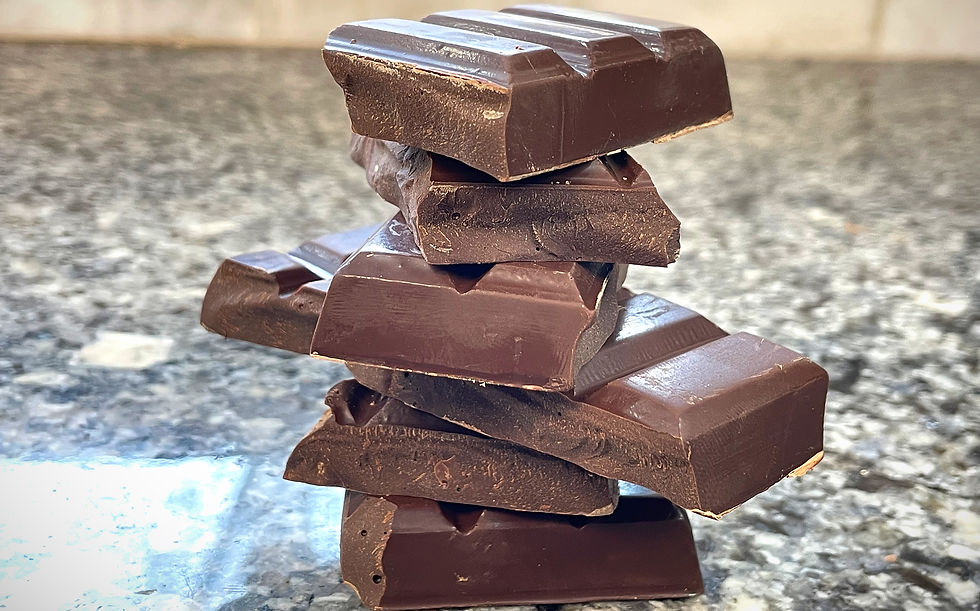
Cacao naturally contains caffeine, and dark chocolate will give you the biggest pick-me-up of the three. A 1-ounce serving contains roughly 20-30 milligrams of caffeine, compared to about 95 milligrams in a cup of coffee. Enough to notice, not enough to keep you up. Probably.
Milk Chocolate: The Crowd Favorite
Milk chocolate is the most widely consumed chocolate in the world, accounting for over 52% of global chocolate consumption, and there’s a reason behind that. Adding milk solids to chocolate creates something creamier, sweeter, and smoother than dark - a flavor profile that tends to be immediately appealing to a broad range of palates, including most children, which means most of us grew up on it.

Milk chocolate generally contains between 10% and 50% cacao, with milk solids and sugar making up the rest. The milk rounds out the intensity of the cacao and adds a richness that dark chocolate doesn’t have in the same way. At the higher end of the cacao range, quality milk chocolate can be genuinely complex and nuanced - not just sweet, but layered, like the 33.6% milk chocolate we use at Christo’s Confections. At the lower end, it skews more toward candy than craft, which is why the percentage on the label matters here too.
On the caffeine front, milk chocolate has roughly 5-10 milligrams per ounce - significantly less than dark, since there’s significantly less cacao. On the health front, it has fewer flavanols than dark for the same reason, though it still carries the benefits of cocoa butter and the mineral content inherent in cacao.
All three have their place. The best chocolate is honestly the one you’re enjoying most in the moment, and there’s no wrong answer.
White Chocolate: The Wildcard

Here’s where things get interesting. White chocolate contains no cocoa solids at all, causing some purists to argue that it doesn’t technically qualify as chocolate. What it does contain is cocoa butter, the fat naturally present in cacao beans, along with milk solids and sugar. So it comes from the same plant and uses a key component of the cacao bean, but skips the part that gives dark and milk chocolate their characteristic flavor and color.
What you get instead is something rich, buttery, sweet, and creamy - a completely different flavor profile that stands entirely on its own merits. Good white chocolate made with quality cocoa butter has a delicate, vanilla-like flavor with a melt that is genuinely luxurious. The reputation white chocolate has for being overly sweet or waxy usually comes from lower-quality versions made with vegetable fat instead of real cocoa butter. Start with good ingredients and it’s a different experience entirely.
White chocolate has essentially no caffeine; without the cocoa solids, there’s nothing to deliver it. And while it doesn’t carry the flavanol benefits of dark or milk chocolate, it does contain cocoa butter, which includes stearic acid and oleic acid, the same fats that make dark chocolate surprisingly neutral on cholesterol.
So Which One Is Healthiest?
Dark chocolate, by a clear margin. More cacao means more flavanols, more minerals, and less sugar. But “healthiest” is doing a lot of work in that sentence, and it’s worth keeping in perspective. The health differences between a thoughtfully made milk chocolate and a high-quality dark chocolate are meaningful but not dramatic, especially at moderate consumption. White chocolate, without the cocoa solids, is more of a confection than a health food, and that’s okay too.
The more useful question might not be which chocolate is healthiest, but which chocolate is made best. Quality matters across all three types. A well-made milk chocolate from a serious producer will deliver more of what cacao has to offer than a poorly processed dark chocolate, and it’ll taste better too. At Christo’s Confections, we work with high-quality Belgian couverture across the board, which means whatever type of chocolate you prefer, you’re getting a worthwhile product.
Which One Is Most Popular?
Milk chocolate wins by a wide margin. It accounts for over 52% of global chocolate consumption and has held that position for a long time. Dark chocolate has been gaining ground steadily, now sitting at around 32% of global consumption, as more people seek out higher cacao percentages and the health conversation around chocolate is becoming more widespread. White chocolate holds about 16% of the market. People who love it tend to really love it, and people who don’t tend to feel strongly about that too. There’s rarely a Switzerland position on white chocolate, a fact which is somewhat ironic.
When it comes down to it, all three chocolates are good. They’re just good in different ways. And now you know exactly why.
Christo’s Confections - Artisan chocolates handcrafted to spread happiness, one bite at a time.


Comments